Bad for business: Street addresses aren’t delivering

‘I am the worst dad ever’ thought Alex as his daughter munched on birthday cake. How do you tell a 5 year old that you don’t know where her present is? He’d taken the afternoon off to wait for the package, but the delivery company said he wasn’t at home to receive it. He puts a disappointed Layla to bed, sits down at his desk, writes an angry tweet, and unleashes it into the Twitterverse.
Unhappy customers turn to social media to vent their frustration at failed deliveries. They can’t believe that in this day and age, in the most well-addressed countries in the world, deliveries still fail. A survey by YouGov found that a whopping 56% of delivery customers have experienced a problem with an online order in the UK last year, and this is only the tip of the iceberg: according to the White House Office of Consumer Affairs, for every customer who speaks up, 26 others remain silent.
Why are deliveries failing?
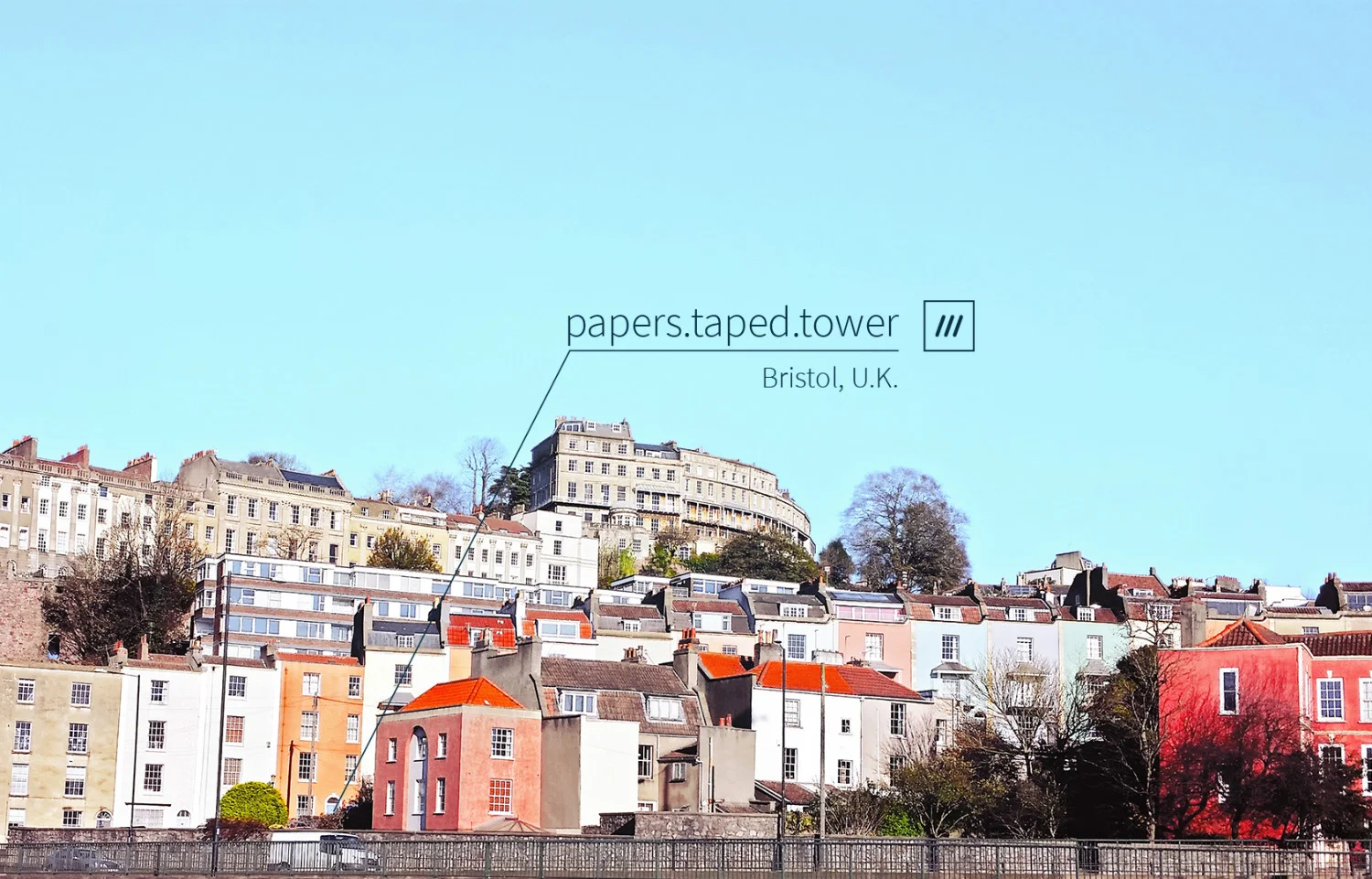
Addresses can be inaccurate, imprecise or confusing. Street names aren’t unique (Zoopla.co.uk found 1116 Church Roads in the UK), some houses aren’t numbered, postcodes cover large areas, and map pins drop in the center of a building instead of a specific entrance. The urban landscape is constantly evolving, with streets being merged or renamed and new builds popping up everywhere, but the changes often take time to be visible on maps. The result? Packages don’t reach their intended destination or are delivered to the wrong address, and some people can’t even make online orders because their addresses are unverifiable.
Businesses are not only wasting time and money dealing with these issues, they’re also losing customers. People want better, faster, hassle-free services, and businesses are lagging behind. While they are getting better at handling complaints, very few are actually tackling problems at the source, according to the UKCSI 2017 report. For delivery and logistics businesses, the source of the problem is imprecise addresses.
Wouldn’t it be great if deliveries always reached customers?
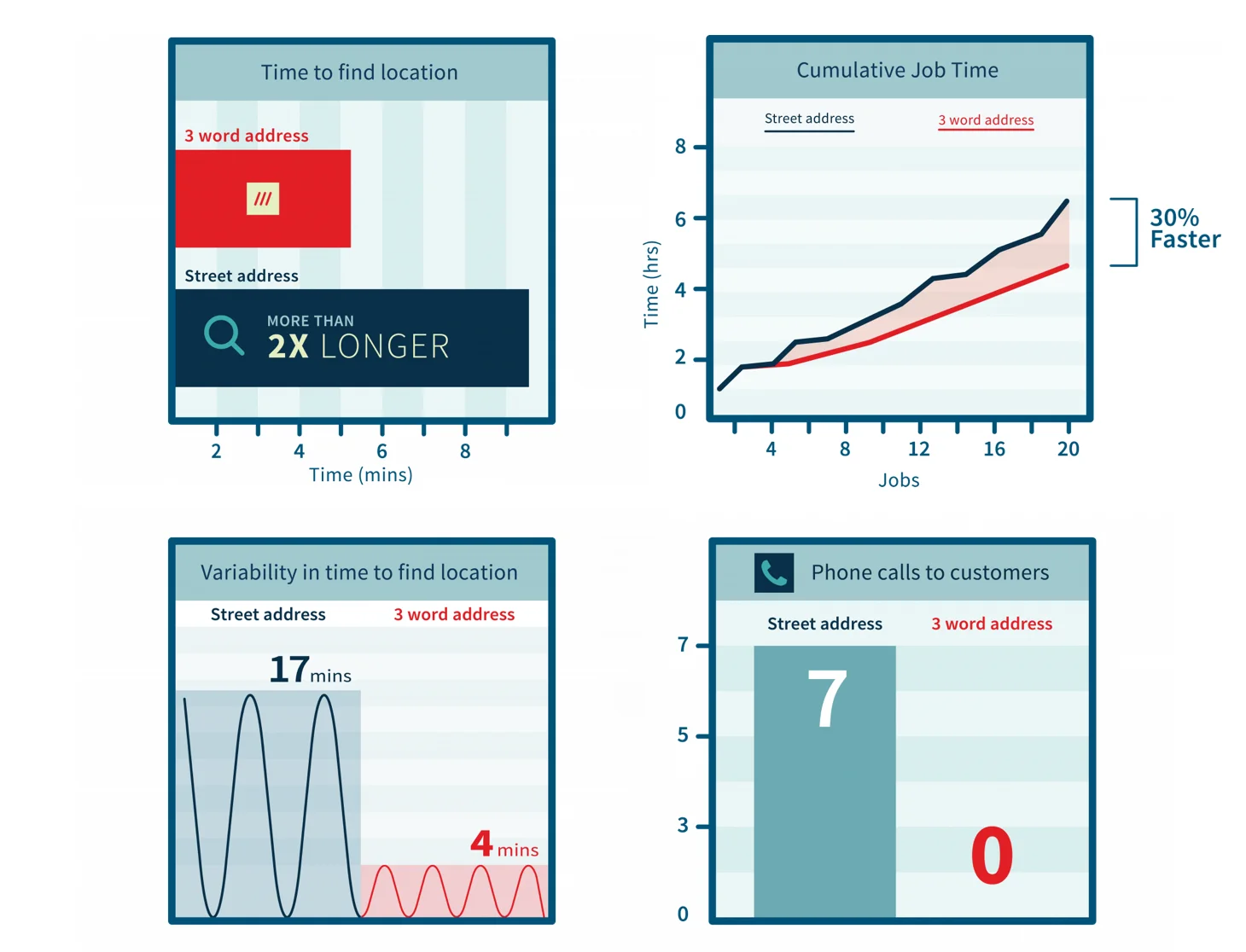
London on-demand courier, Quiqup, tested 3 word addresses against traditional street addresses over 20 deliveries. 3 word addresses more than halved the time taken to find each drop-off location and reduced the overall delivery time by an incredible 30%. 3 word addresses also proved more predictable to find, reducing the variability of delivery time which could allow drivers to be reliably allocated to the next job before completing their current delivery.
With 3 word addresses, street name mistakes, missing house numbers and old maps no longer affect deliveries, and everyone, everywhere, has a precise address that can be easily shared. Businesses can save time and money, provide a better service, build a positive brand image, and make sure customers only have good things to tweet about their delivery experiences.