Where do drivers find what3words addresses?


Every day, millions of drivers experience needless stress and wasted time due to outdated addressing systems. Whether it’s a satnav sending someone to the middle of a building rather than the front entrance, a postcode leading to the wrong street, or a voice assistant mishearing a duplicated address, traditional in-car navigation systems rarely deliver pinpoint precision.
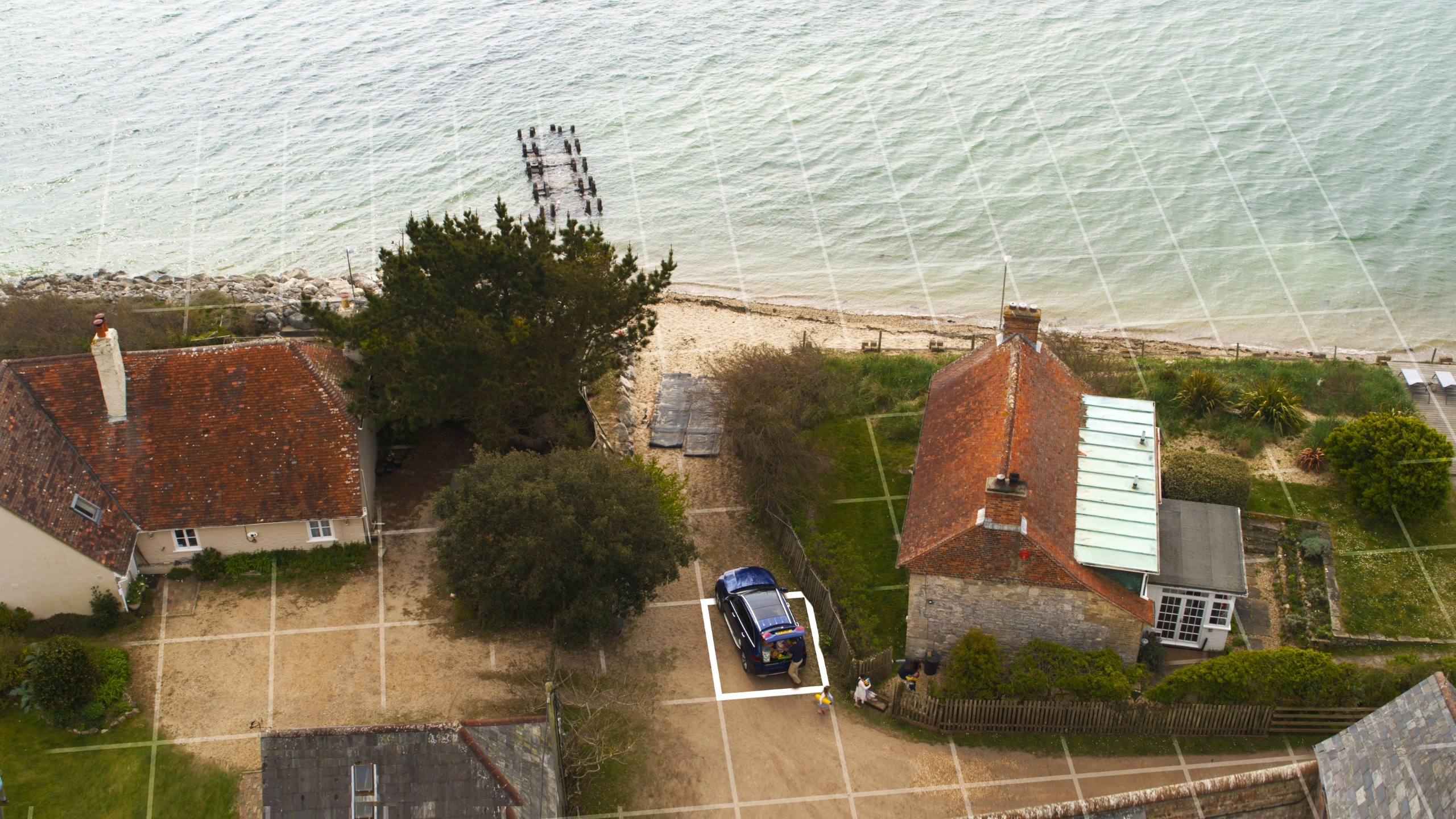
what3words was created to fix these issues, dividing the world into three-metre squares, each with a unique, easy-to-share three-word address. It’s no wonder over 7 million people in the UK alone have used what3words in the past year, with a what3words address searched every second. But how and where do drivers get these three-word addresses?
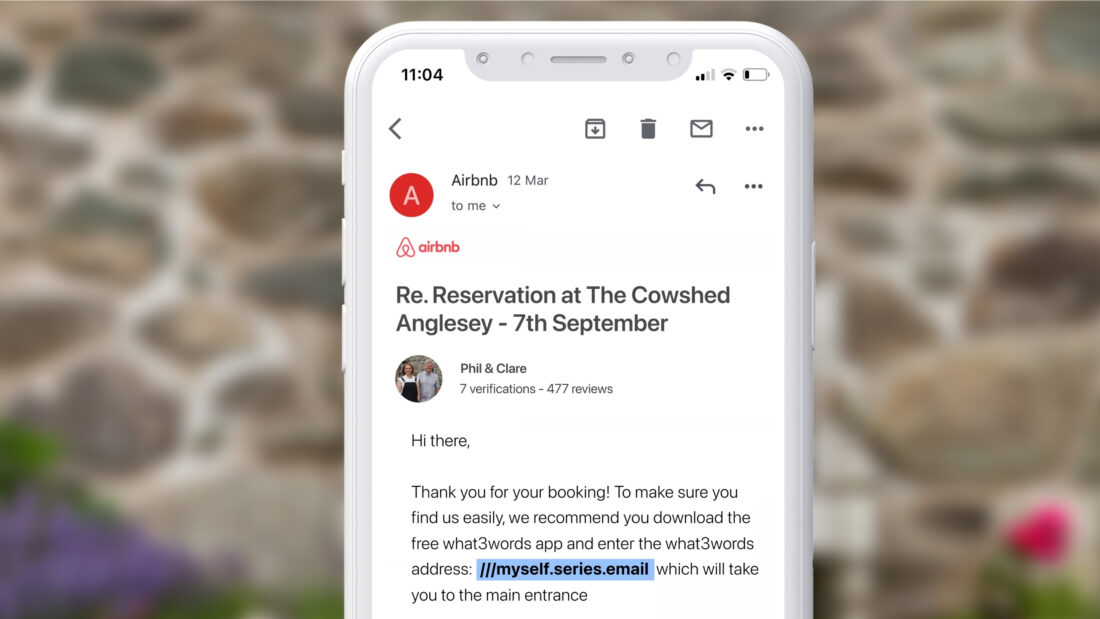
Booking platforms have embraced what3words to eliminate arrival frustrations. Many Airbnb hosts include what3words addresses in guest directions to eliminate the “where exactly should I park?” confusion and to ensure a smooth arrival. Similarly, hotels display what3words addresses on contact pages and booking confirmations to avoid guests arriving at the wrong hotel when they have similar names in the same city. This precision matters particularly for properties with multiple buildings, separate check-in areas, or locations where postcodes cover vast areas.
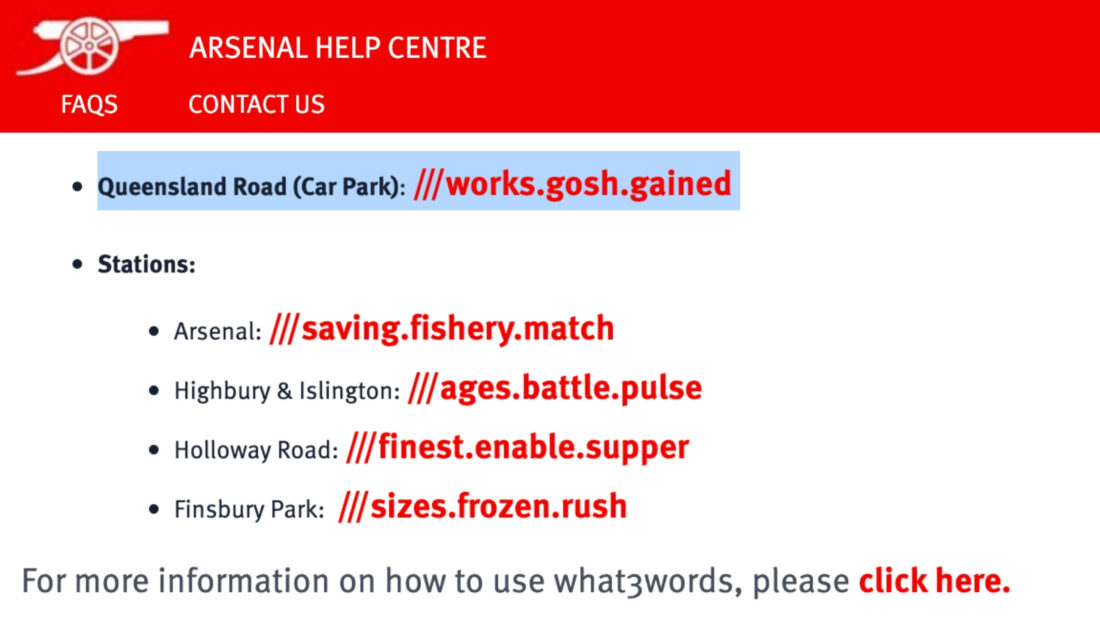
Major venues display what3words on their website and on event tickets to solve the multi-entrance navigation challenge. For example, Alexandra Palace displays what3words addresses like ///stands.bridge.rust for East Court entrance where the parking can be found because the traditional address routes visitors to the centre of the building. Locations such as Goodwood Festival of Speed provide the what3words address ///shears.continued.drips for the entrance to Gate 1, ensuring drivers get to the right location first time. When arriving by car to a busy event, location accuracy is paramount for a stress-free arrival.
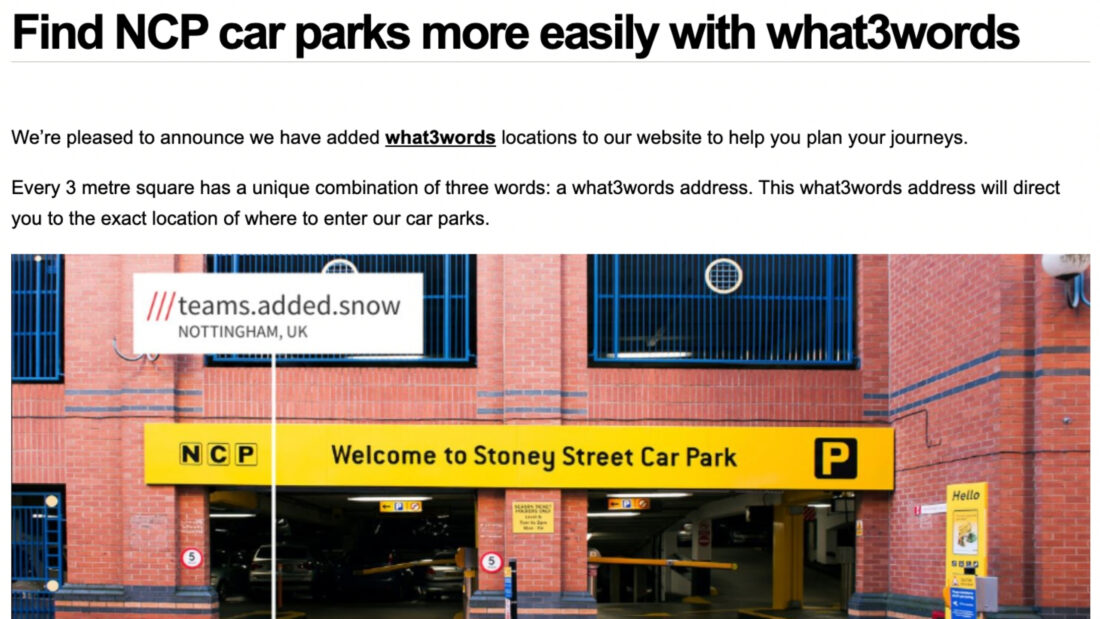
Car Parks display what3words addresses on site location pages to eliminate the common scenario where drivers find the general area, but can’t locate the actual entrance. For example, Q-Park lists ///trader.insect.shirt for the precise entrance of the Oxford Street car park. Similarly, NCP provides what3words for exact entrances, with Nottingham Stoney Street accessible via ///teams.added.snow. This precision matters because traditional addressing often routes drivers to a street that runs alongside a car park without indicating which entry points to use.
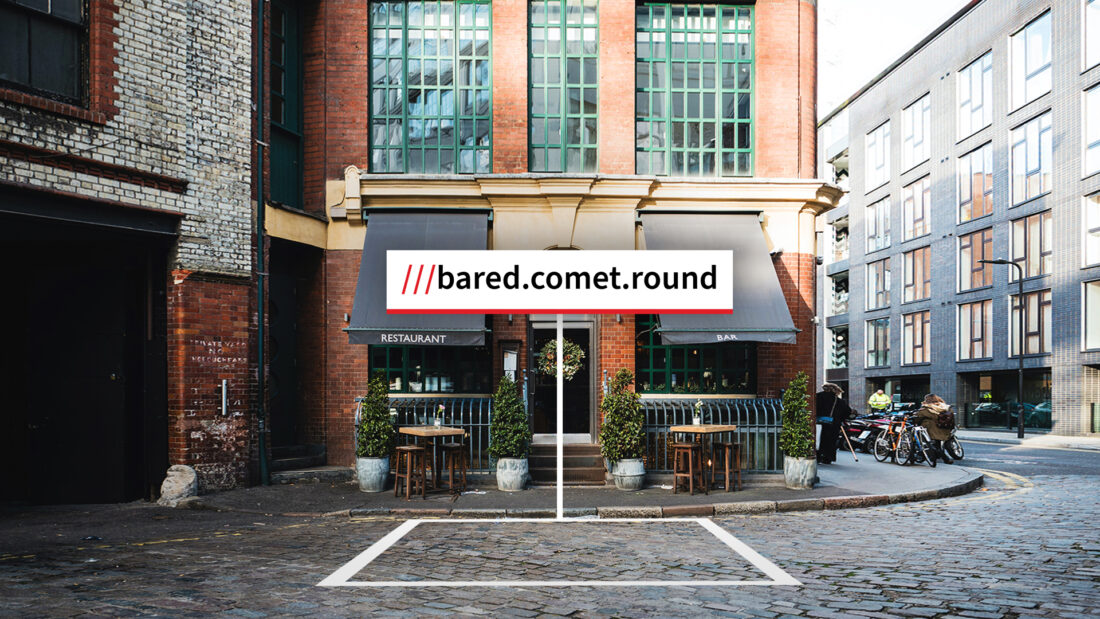
Restaurants and hospitality venues include what3words addresses on their website to help diners & visitors find them easily. This precision also matters in dense urban areas where multiple venues share similar addresses or where restaurants have entrances on different streets from their postal addresses.
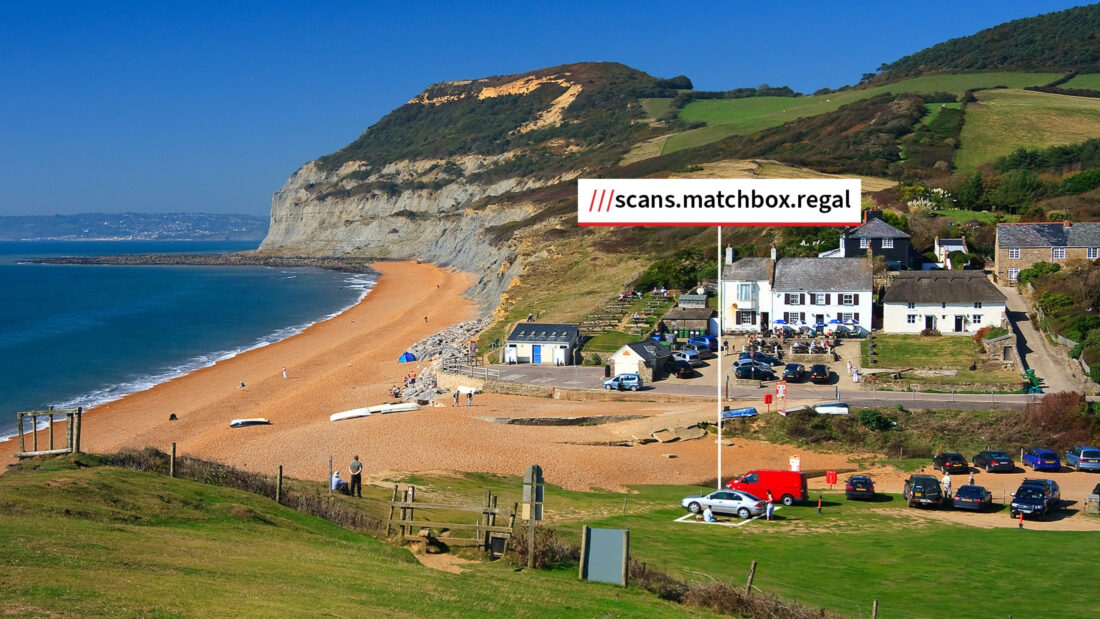
Friends and communities use and share what3words addresses for scenic viewpoints, beach car parks, precise pickup/drop-off locations, or meet-ups. This is to ensure everyone arrives exactly where they’re meant to be, and where traditional addressing just doesn’t quite work.
So why do drivers choose to use what3words?
Precision eliminates navigation guesswork and reduces arrival stress. what3words addresses guide drivers to the precise 3 metre square, meaning they arrive at the exact entrance, parking spot, or meeting point, first time.
Voice navigation becomes reliable and hands-free. Street addresses create problems for voice assistants as similar-sounding words, complex pronunciations, and duplicate road names cause system misunderstandings. Enabled voice assistants can easily recognise what3words addresses ensuring truly hands-free destination input. Read more on this here .
Everywhere on the planet has a what3words address which means drivers can navigate to viewpoints and off-road destinations that postcodes cannot locate. So regardless of where you want to go in the world, you’ll be able to find the precise location with what3words.
Sharing a location becomes as simple as saying three words instead of long descriptions of the location. This precision means everyone arrives at exactly the same spot, eliminating frustration and time wasted finding the location.
Leading OEMs are integrating what3words into their vehicles because drivers around the world are already using these addresses everywhere – from Airbnb directions to car parks to precise drop-off locations. It’s become the go-to way for people to communicate precise locations and eliminates the frustrations of poor addressing for drivers.