How regional transport solved customer service challenges with what3words


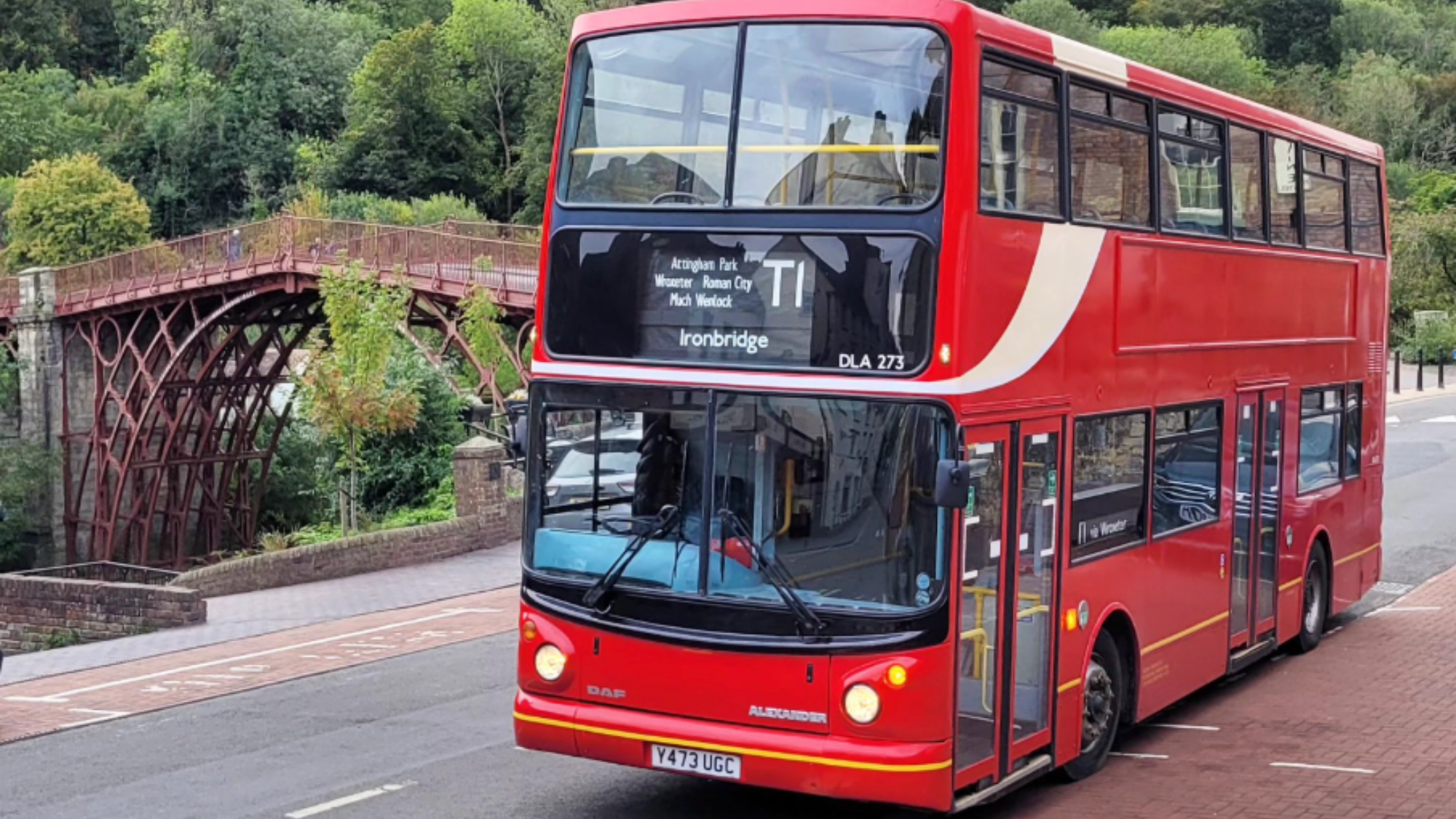
When passengers can’t find their bus stop, operators face frustrated customers and extra support queries. Regional Transport solved this problem on their heritage T1 tour by implementing what3words to make its bus stops easy to find.
Solving real customer service challenges
Regional Transport encountered a location challenge. Their passengers struggled to locate precise bus stop positions along their Shrewsbury to Ironbridge heritage route, leading to confusion and frustration for tourists and locals alike. Bus stops in remote areas are often hard to find, especially where traditional postcodes cover large areas, making it difficult for tourists and unfamiliar passengers to find exact pickup points.
“From feedback, I was hearing that passengers could not find our bus stops, which are always on main roads and such, despite having our information displayed in shelters and handy direction pointers, as well as information given both on our website and in paper leaflets,” explains Mr Thompson from Regional Transport (1).
This feedback highlighted the core issue: even with traditional wayfinding methods, passengers still struggled to find exactly where to go leading to customer complaints.
Using what3words was a simple and effective solution
Regional Transport listed what3words addresses for every stop on their T1 tour route, allowing passengers – particularly tourists unfamiliar with the area – to pinpoint exact pickup and drop-off locations using just three words. The heritage buses, including a 1962 Routemaster and 1979 Leyland National, now serve clearly defined locations that passengers can navigate to confidently.
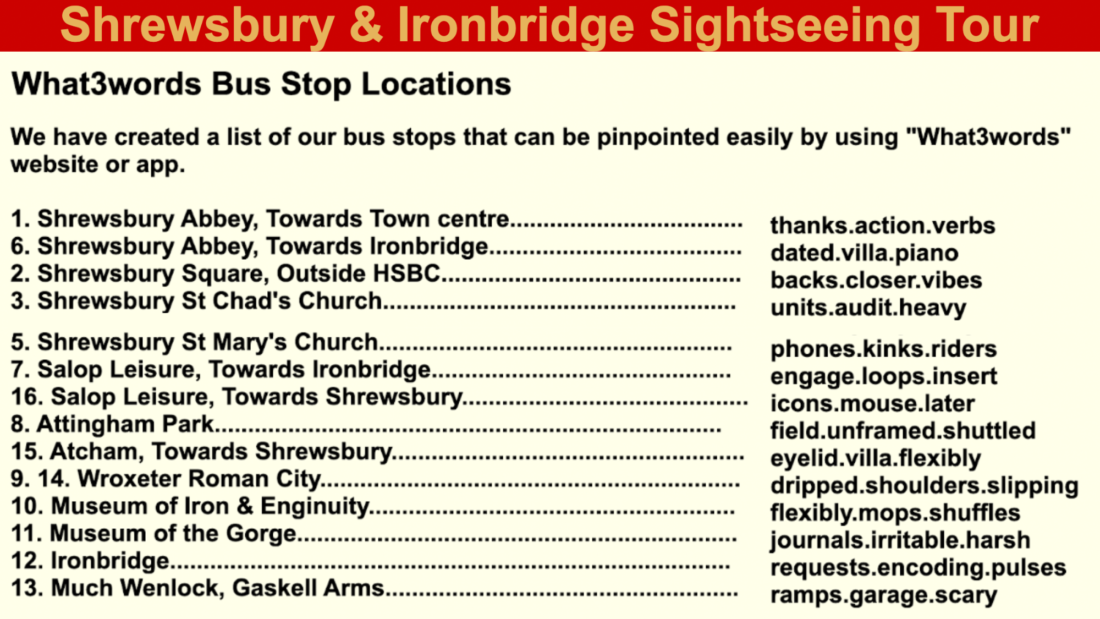
“We have created a list of our bus stops that can be pinpointed easily by using what3words website or app,” explains Regional Transport on their website, highlighting how they addressed this customer service challenge directly (1).
The implementation was straightforward – each bus stop on their website now displays a corresponding what3words address alongside traditional route information, giving passengers multiple ways to locate their boarding point accurately. This simple addition transforms the passenger experience for anyone unfamiliar with the Shropshire countryside locations.
Business impact across transport operations
Regional Transport’s adoption of what3words demonstrates measurable benefits that apply across transport operations:
- Reduced customer support burden: Sharing what3words addresses eliminates confused passenger queries about stop locations, freeing customer service teams for higher-value interactions.
- Enhanced service accessibility: Tourists and unfamiliar passengers can access services confidently, expanding customer reach and satisfaction whilst supporting local tourism infrastructure.
- Professional service reputation: The adoption of modern location technology positions operators as customer-focused organisations, crucial for building trust in public transport services.
Industry-wide transport applications
Regional Transport is part of a wider movement across the transport sector embracing what3words for passenger-facing wayfinding and real-world use. Here are just a few examples of how it is helping operators and riders across the UK and globally:
- Merchant Taylors’ School uses what3words addresses on its published bus timetables, giving parents and students exact locations for safe and reliable pickups (2)
- Bauer Media Outdoor and Essex County Council display what3words addresses on Basildon’s Greener Route bus shelters, helping travelers pinpoint stops and improve safety (3)
- National Rail and Southern Rail UK use what3words to share the precise pick-up points for rail replacement buses, and CMAC enables rail replacement taxi dispatch using what3words, making unfamiliar pick up spots easy to find for all passengers.
- Taxi and ride-hailing platforms: Careem (KSA), S.Ride (Japan) and many taxi companies in the UK let riders enter a what3words address for pickups and drop-offs, removing ambiguity around hard-to-describe locations.
- Navigation and journey planning apps: BusMap (Vietnam), KakaoMap (Korea), Navitime (Japan), and Avenza Maps allow users to enter a what3words address for smooth navigation directly to their desired destination.
From schools to taxis to journey planner applications, what3words is making precise location part of everyday passenger journeys on a global scale.
Transform your transport operations
From heritage bus tours to city mobility platforms, what3words is transforming how transport operators communicate location information to passengers, drivers, and partners. Operators who make their stops discoverable with just three words are delivering a better passenger experience and modernising their customer service.
Ready to enhance your passenger experience and operational efficiency?
References:
- Regional Transport uses what3words for T1 tour passengers. Route-One. https://www.route-one.net/news/regional-transport-uses-what3words-to-assist-t1-tour-passengers/
- Merchant Taylors School bus timetables. https://www.merchanttaylors.com/admissions/school-bus-timetables/
- Bauer Media and Essex County Council launch Basildon Greener Route with what3words. LBB Online. https://lbbonline.com/news/Bauer-Media-Outdoor-Essex-County-Council-Milestone-shelters-Basildon