How event organisers use what3words to improve logistics, safety and visitor experience


From festivals to football matches, the best events feel effortless. Behind the scenes, though, organisers are coordinating hundreds of moving parts: suppliers, crews, infrastructure, security, medical teams and thousands of visitors.
One of the biggest challenges is simply making sure everyone can find exactly where they need to be. Large event sites often have no street addresses, few fixed landmarks and patchy mobile signal, making precise locations surprisingly difficult to communicate.
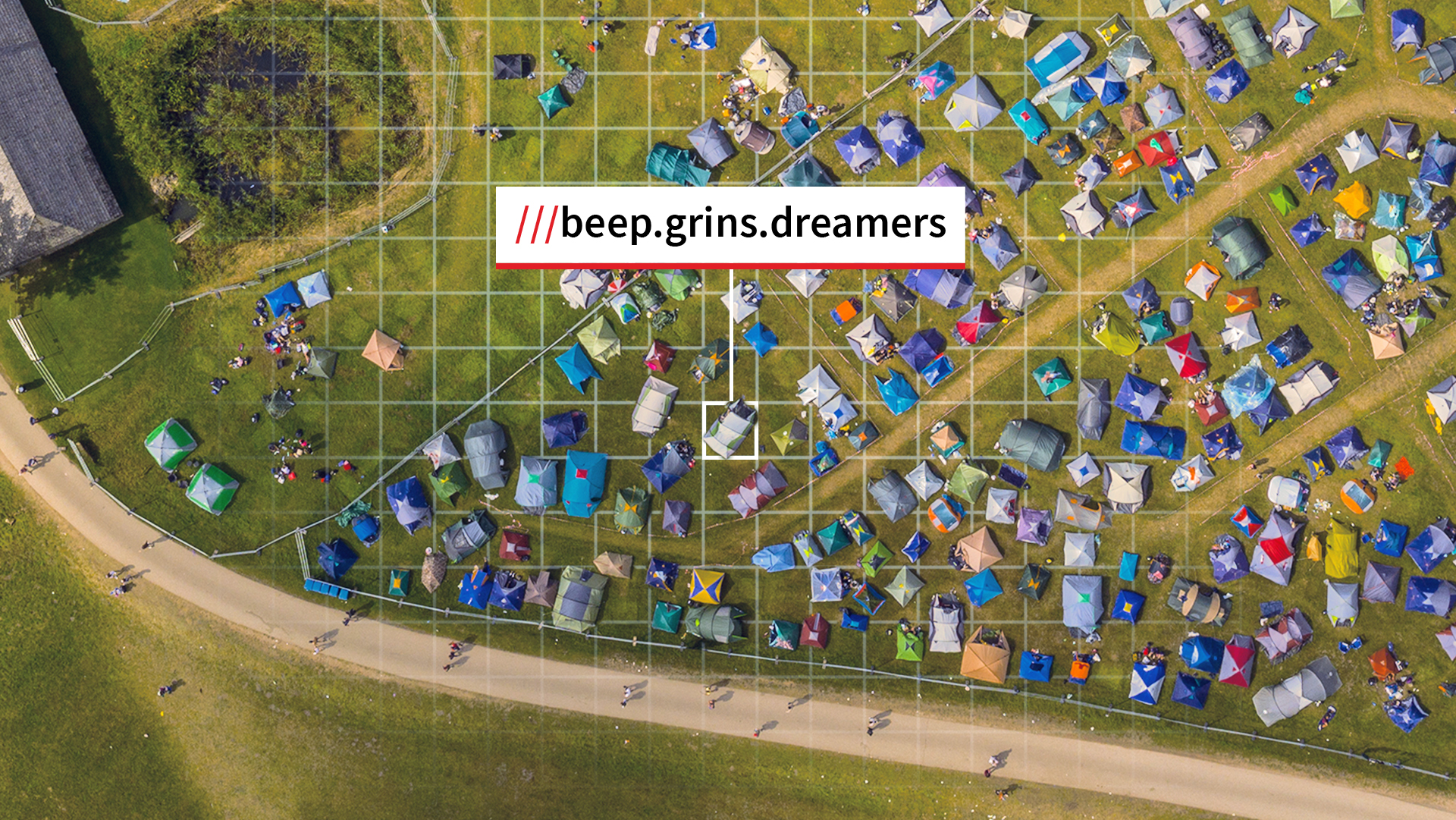
That’s where what3words comes in. The system has divided the world into a grid of 3m x 3m squares, and assigned each square a unique combination of three words, known as a what3words address. This means every spot on the earth has its own unique and easily-communicable address. This blog outlines how what3words helps event organisers improve planning, logistics, safety and the visitor experience.
1. Improve event planning and logistics
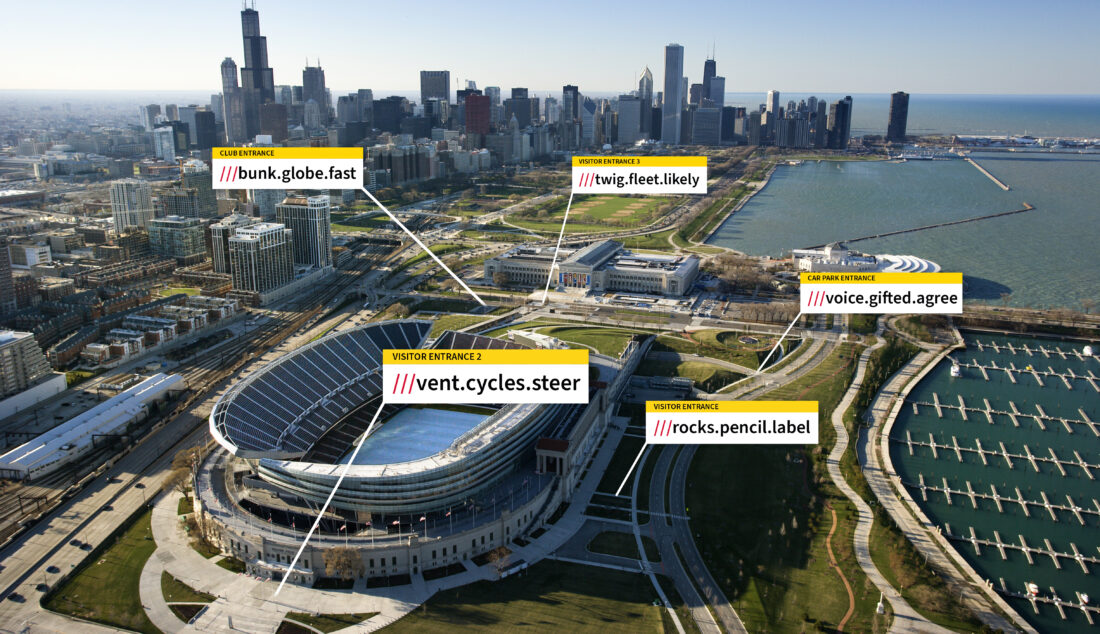
Long before visitors arrive, event teams need to coordinate suppliers, contractors, production crews and infrastructure across large sites. A delivery may need to reach a particular loading bay. A technician may need a specific stage entrance. Teams may need to record the exact locations of generators, barriers, signage or temporary facilities.
what3words gives each of these locations a precise 3 word address, replacing lengthy directions or unclear descriptions. Teams can easily save and share these locations with suppliers and contractors so they can navigate directly to the right place. For teams managing hundreds or thousands of locations, what3words Pro makes it easy to import, organise, manage and share them at scale.
At the British Grand Prix, Silverstone uses what3words as part of its event operations:
“To deliver an event to the scale of the British Grand Prix, the planning has to be so detailed. We use what3words to locate infrastructure and to report any location for incidents.” — Jacalyn Morgan, Silverstone
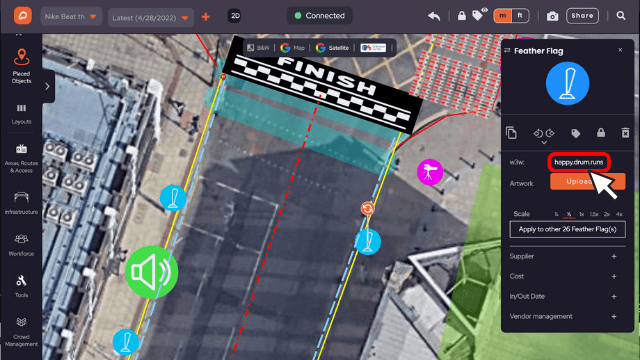
what3words is also built into event planning and operations tools that teams already use. Platforms such as OnePlan , Iventis , Controlled Events and Voyage Control help organisers use what3words addresses to plan sites, share precise locations, log incidents and coordinate teams. In OnePlan, for example, users can share 3 word addresses for important spots with equipment suppliers, performers and vendors, helping everyone get exactly where they need to be.
2. Improve event safety and incident response
At a large event, being able to quickly communicate exactly where an incident has happened can make a real difference. A description like “near the main stage” or “by the north entrance” can still cover a large area. what3words gives event teams a simple way to communicate a precise incident location, helping medical, security and stewarding teams coordinate responses across busy or unfamiliar sites.
what3words is also widely used by emergency and public safety teams around the world. Over 85% of UK emergency services use what3words, alongside public safety teams across the US , Canada , the DACH region and many other countries.
That becomes particularly useful at large-scale events. Ahead of the 2026 World Cup, first responders in Kansas City promoted what3words as a way to locate people more quickly in crowded or difficult-to-describe places. Lenexa Fire Chief Travis Vaughn said that being able to locate someone more quickly can lead to better outcomes because, in emergency response, “time matters greatly. ”
The same approach has been used around other major events. Ahead of around 800,000 visitors arriving in Pittsburgh for the NFL Draft, Pittsburgh EMS encouraged attendees to download what3words so they could pinpoint their exact location if they needed help . And in the UK at Glastonbury, police have encouraged festival-goers to use what3words to share their precise location in an emergency.
For event organisers, this creates a common way for attendees, event teams and supporting emergency services to communicate precise locations.
3. Help visitors navigate large event sites
Event sites often have multiple gates, entrances, stages, stalls, facilities and meeting points. Giving each one a what3words address can make them easier for visitors to find.
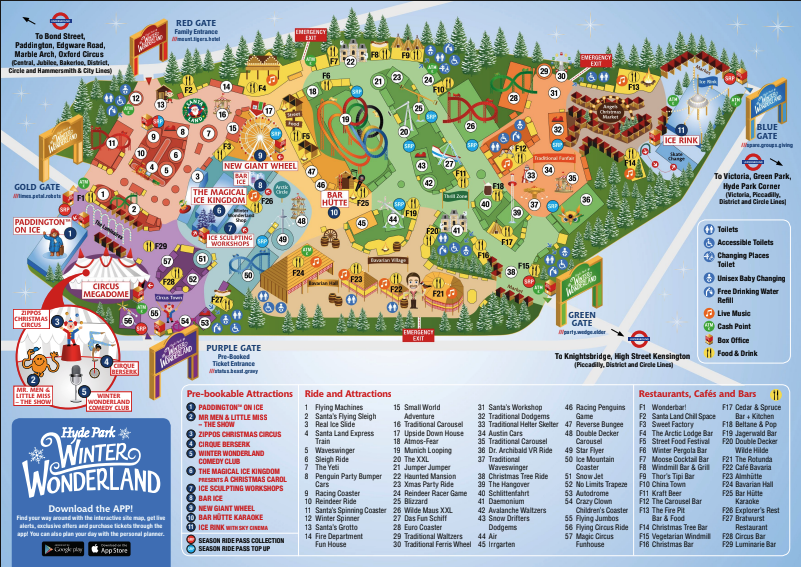
At Hyde Park Winter Wonderland, what3words addresses are used for stalls, attractions and gates.
“We use what3words for people to be able to find exactly what stall they want to go to. All of our attractions are identified via what3words and each of our gates. It’s an amazingly simple solution.” — Suzy Griffith, Hyde Park Winter Wonderland
Large-scale sports events benefit from precise locations, whether fans are arriving at a stadium or spectators are navigating long routes and temporary sites. , , and many more use what3words to help fans navigate. Ticketing platform provides IPL cricket ticket holders with the 3 word address for their stadium entrance directly in their booking confirmation. At mass participation events like the , what3words addresses are listed for accessible viewing areas along the course, helping spectators find precise locations on a busy event route.
Precise locations can also improve accessibility across wider event sites: at , what3words has been used to identify accessible entrances, barrier-free seating, accessible toilets and drinking water fountains across the event.
4. Improve the visitor experience
what3words can also become a part of the attendee experience itself. Visitors can use the what3words app to save the location of a tent or parked car, create lists of useful places, share a precise meeting point with friends, find entrances, stages or facilities, navigate using Compass Mode, and communicate their location in an emergency.
At Glastonbury 2025, 1 in 3 people at the festival used what3words. Musical artists have also used what3words creatively to build location into fan campaigns, shows and pop-ups, including Louis Tomlinson, Disclosure , George Ezra and Mumford & Sons .
For event organisers and promoters, that creates an opportunity beyond navigation. what3words can become part of how an event is discovered, explored and remembered, while also giving attendees a simple way to describe precise locations across the site.
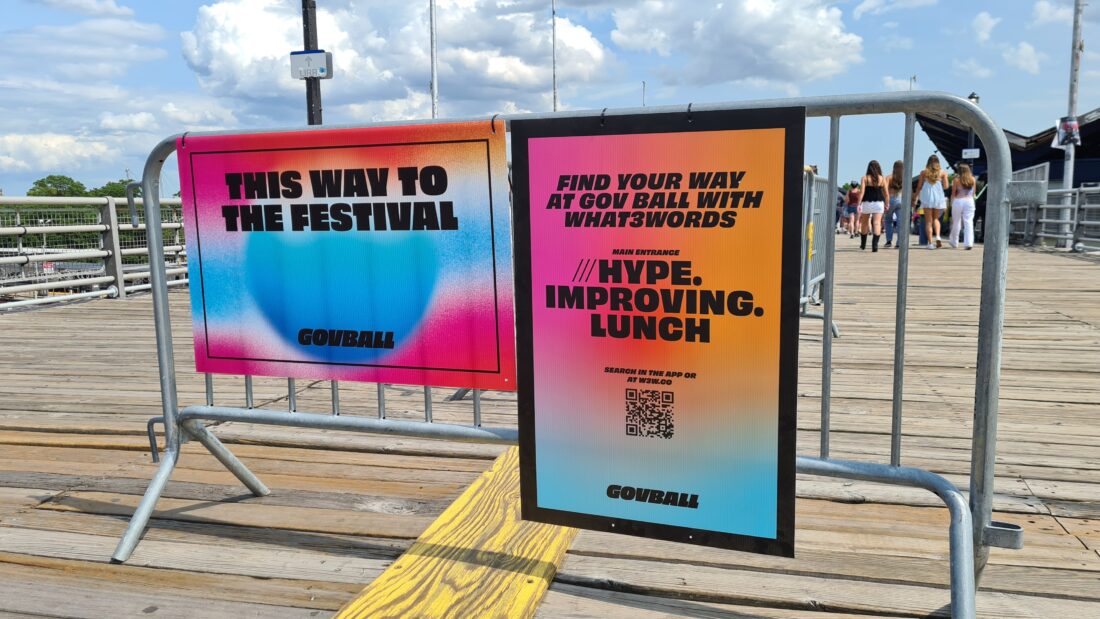
Events including Glastonbury, Parklife, GovBall, SXSW and Austin City Limits have incorporated what3words into their visitor experience.
How can event organisers get started?
Whether you are organising a festival, a stadium event, or a large-scale open day, start by identifying the locations that are hardest to describe or most important to your event: entrances, loading bays, stages, medical points, accessible facilities, parking areas and meeting points. Assigning and sharing what3words addresses for these locations gives teams, visitors and emergency services a common language for precise location.
Find out how what3words works for events and travel:
Ready to manage locations across your team?